The optimal operating temperature for 40CR material Chain
- Share
- Issue Time
- Jul 3,2026
Summary
In the world of heavy mechanical transmission and lifting equipment, 40Cr (the Chinese equivalent of AISI 5140) is widely regarded as a reliable workhorse.
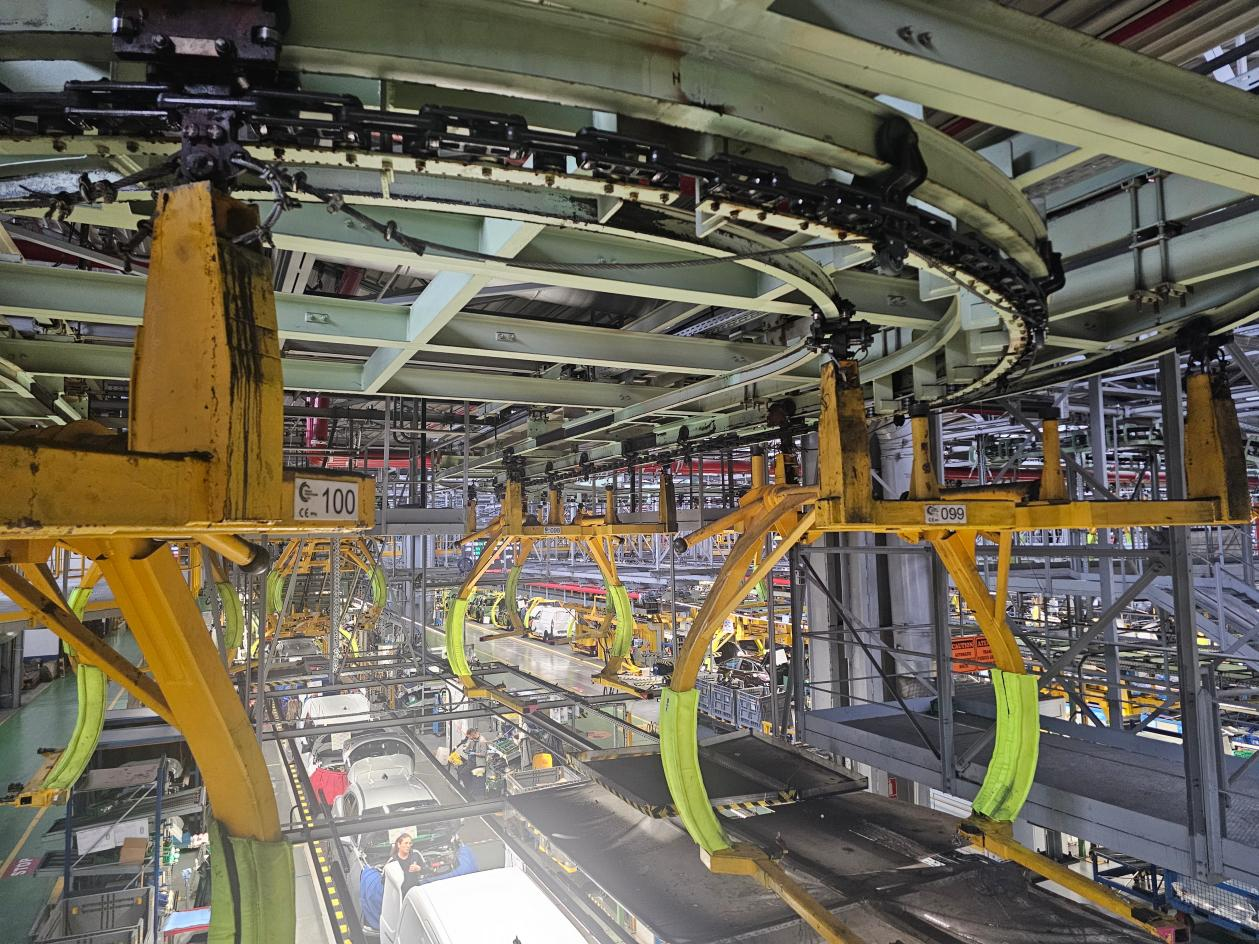
Don't Let This "Tough Guy" Get Heat Stroke: Why 300°C Is the Redline for 40Cr Forged Chains
In the world of heavy mechanical transmission and lifting equipment, 40Cr (the Chinese equivalent of AISI 5140) is widely regarded as a reliable workhorse. As one of the most commonly used alloy structural steels, 40Cr forged chains offer an excellent balance of high strength, good wear resistance, and cost-effectiveness—making them the go-to choice for traction components in heavy-duty machinery.
However, a dangerous misconception persists among many maintenance engineers and operators: “It's steel—it can handle a few hundred degrees Celsius.”
The reality is far less forgiving. When exposed to elevated temperatures, these seemingly robust chains can degrade rapidly, suffer premature failure, or even experience catastrophic brittle fracture—often without warning.
Today, we'll break down the metallurgical reasons why the maximum recommended continuous operating temperature for 40Cr forged chains is strictly 300°C—and why exceeding this limit is asking for trouble.
What Makes 40Cr So "Tough" in the First Place?
The superiority of 40Cr over plain carbon steels (like 45# steel) comes down to two key factors:
1. Alloying Element – Chromium (Cr): The addition of ~0.8–1.1% Cr improves hardenability, wear resistance, and provides moderate corrosion/oxidation resistance.
2. Heat Treatment – Quenching & Tempering: 40Cr chains are typically delivered in the quenched and tempered (Q&T) condition, which produces a tempered sorbite microstructure. This fine-grained structure is metallurgically analogous to reinforced concrete—delivering both high tensile strength and impact toughness.
3. In this state, a 40Cr chain typically achieves:
● Hardness: HRC 38-42
● Tensile Strength: Exceeding 1000 MPa (approx. 145,000 psi)
These properties make it ideal for withstanding high static loads and cyclic fatigue—at room temperature.
300°C: The Invisible Metallurgical Redline
So why does this "tough guy" lose his nerve above 300°C? The answer lies in two irreversible metallurgical phenomena.
1. First-Type Temper Embrittlement (Irreversible)
40Cr steel is susceptible to first-type temper embrittlement, which occurs in the 250°C – 400°C range. While the manufacturer's heat treatment avoids this zone during production, if the chain's service temperature consistently sits at or above 300°C, the chain undergoes in-service tempering.
During this process, fine carbides precipitate along grain boundaries, weakening the cohesive strength between adjacent grains. The result? The chain no longer fails by ductile overload (stretching and necking), but by intergranular brittle fracture—the fracture surface resembles sparkling crystallized sugar, with virtually no plastic deformation. This mode of failure is sudden, unpredictable, and extremely dangerous.
2. Progressive Loss of Strength and Hardness
Even before embrittlement sets in, the high-temperature yield strength and tensile strength of quenched-and-tempered 40Cr begin to drop measurably:
● At 300°C, the ultimate tensile strength decreases by approximately 15–20% compared to room-temperature values.
For a chain subjected to cyclic or impact loading, this reduction directly erodes the safety factor, drastically shortening fatigue life—often exponentially, not linearly.
What Actually Happens Above 300°C?
At 400°C: Surface oxidation accelerates significantly. The protective chromium-oxide layer becomes unstable, spalls off, and reduces the chain's effective load-bearing cross-section. Meanwhile, internal carbide coarsening further degrades toughness.
At 500°C and above: The material enters the creep regime. Under constant tensile load, the chain will gradually elongate like plasticine—a slow but irreversible deformation that ultimately leads to dimensional failure and loss of function.
Closing Thought: Respect the Redline
Let's be clear: 40Cr forged chains are excellent components—but only within their designed thermal envelope.
300°C is not an arbitrary number. It is the result of thousands of tensile tests, impact tests, and metallurgical examinations conducted over decades of engineering practice. This temperature marks the threshold where grain boundary strength begins to give way, where fatigue life enters steep decline, and where ductile-to-brittle failure modes switch without warning.
In the field of material handling, the reliability of chains directly impacts the efficiency and service life of entire production lines. Camvey forged chains, with their exceptional high strength, wear resistance, and tool-free assembly/disassembly design, provide ideal conveying solutions for a wide range of heavy-load and harsh operating conditions.