How to Choose Plastic Wheels for Overhead Conveyor Applications in the Meat Industry
- Share
- Issue Time
- Dec 29,2025
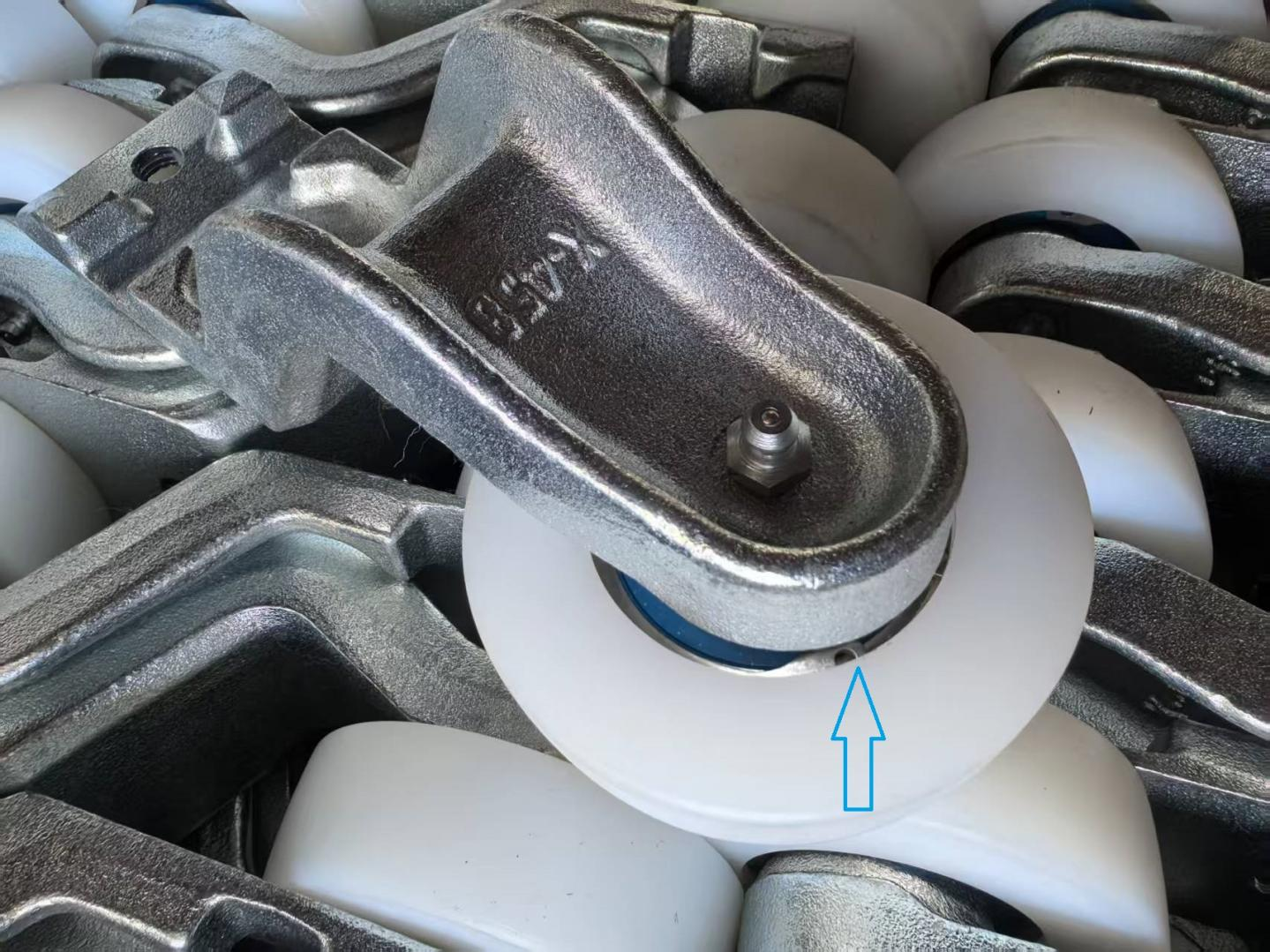
Why are plastic wheels widely used in meat processing overhead conveyors?
Compared with steel wheels, plastic wheels are preferred in meat processing environments because they offer:
✔ Excellent corrosion resistance against water, blood, chemicals, and cleaning agents
✔ Better hygiene performance, with smooth surfaces that are easier to clean
✔ Lower noise and vibration, improving working conditions
✔ Reduced wear on I-beams and tracks
These advantages make plastic wheels ideal for Poultry Processing, Pork Processing, and other food-grade conveyor systems.
What plastic materials are commonly used for conveyor wheels?
Several engineering plastics are used, depending on operating conditions:
🔹 PA6 (Nylon 6)
Good mechanical strength and wear resistance
Cost-effective and widely used
Suitable for general meat processing lines with moderate temperature and humidity
Typical applications:
Standard overhead conveyors in poultry and pork plants.
🔹 PA66 (Nylon 66)
Higher strength and better heat resistance than PA6
Improved dimensional stability under load
Typical applications:
Heavy-duty sections or higher-speed conveyors
🔹 PA12
Excellent moisture resistance and low water absorption
Stable performance in wet and cold environments
Good chemical resistance
Typical applications:
Poultry slaughter and chilling lines
Wash-down intensive meat processing areas
🔹 UHMW-PE
Extremely low friction
Outstanding wear resistance
Good impact resistance
Typical applications:
Low-noise conveyor systems
Curved track sections
How do temperature and wash-down conditions affect material selection?
In Poultry Processing and Meat Processing plants, wheels are often exposed to:
✔ Hot water cleaning
✔ Steam
✔ Chemical disinfectants
✔ Cold rooms (0–4°C)
Material selection tips:
✔ For high humidity and frequent wash-down → PA12 is recommended
✔ For higher temperatures → PA66 performs better
✔ For cold environments → Avoid materials with high water absorption
Choosing the wrong material may lead to swelling, cracking, or premature wear.
How do I choose the right wheel model and size?
When selecting a plastic wheel model, consider:
● Rail size
● Load capacity per trolley or chain link
● Conveyor speed
● Bearing type (sealed bearing recommended for meat industry)
For example:
● Poultry lines usually require lighter wheels with high corrosion resistance
● Pork and beef lines often need larger diameter wheels with higher load ratings
Always match the wheel model to both system design and operating load, not just beam size.
What bearings should be used with plastic wheels in meat processing?
For overhead conveyor applications in the meat industry, we strongly recommend:
● Sealed or double-sealed bearings
● Stainless steel or corrosion-protected bearing components
● Food-grade or high-temperature grease (if applicable)
This helps prevent water ingress, rust, and bearing failure during frequent cleaning cycles.
Can plastic wheels be customized for specific meat processing lines?
Yes. A professional overhead conveyor component manufacturer can provide:
☞ Custom wheel diameters and widths
☞ Specific plastic materials (PA6, PA12, UHMW, etc.)
☞ Bearing upgrades for extreme environments
☞ Compatibility with existing conveyor brands and systems
Customization is especially common in Poultry Processing plants with unique line layouts or imported conveyor systems.
What is the most common mistake when choosing plastic wheels?
The most common mistake is selecting material based on price only.
In meat processing:
Wrong material = higher failure rate
Bearing damage = unplanned downtime
Swollen or cracked wheels = hygiene risk
A slightly higher upfront cost often results in longer service life and lower total operating cost.
Final Thoughts
Choosing the right plastic wheel for overhead conveyor applications in the meat industry is not just about size—it's about material, environment, load, and hygiene requirements.
Whether you are running a Poultry Processing, Pork Processing, or Beef Processing line, the correct wheel selection can significantly improve reliability, cleanliness, and system performance.
If you need technical support or material recommendations, working with an experienced overhead conveyor component manufacturer is always the best approach.Contact us right now!